




BLOG
Why Is My AC Leaking Water? 5 Common Causes (and How to Fix Each)
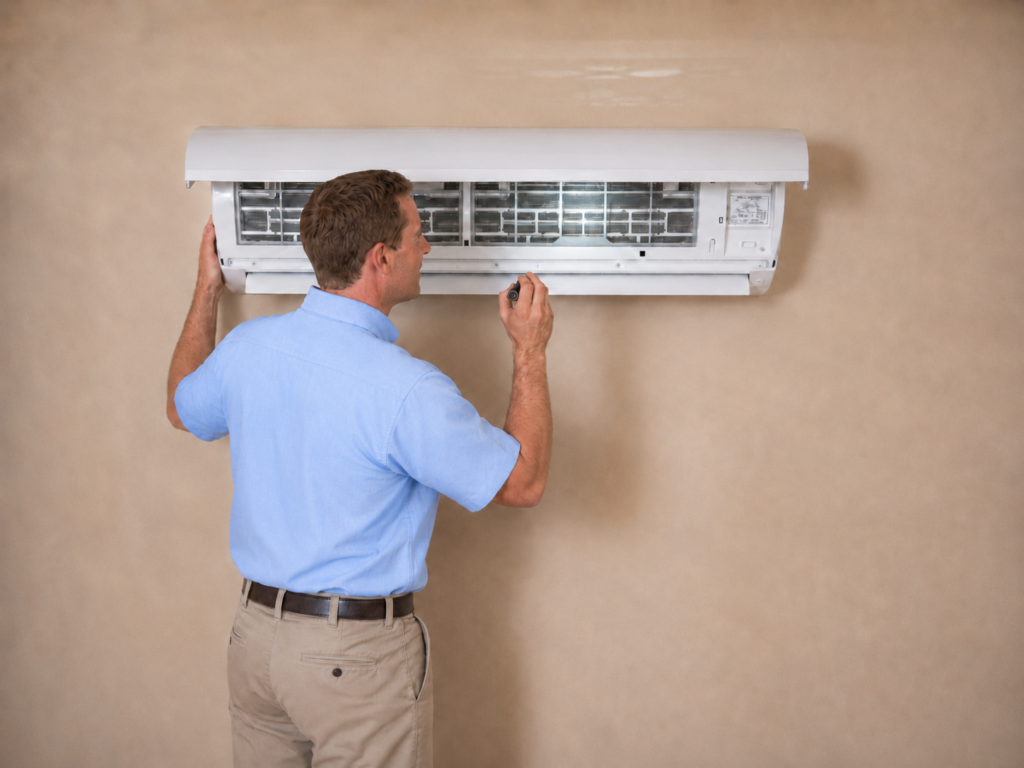
An air conditioner leaking water inside the house is almost always caused by one of five things: a clogged condensate drain line, a frozen evaporator coil, a cracked or rusted drain pan, a failed condensate pump, or a dirty air filter causing the coil to ice over.
In Florida, a clogged drain line accounts for the majority of summer leaks because high humidity accelerates algae growth inside the condensate line. Most of these problems are fixable, and some you can handle yourself. Before you do anything else, turn the AC off at the thermostat. Running it while it's leaking just adds more condensate to the problem.
Here's a quick look at all five causes before we go deeper into each one.
| Cause | How urgent? | DIY-able? |
|---|---|---|
| Clogged drain line | Medium — water damage risk if ignored 24h+ | Yes — flush with vinegar (≈15 min) |
| Frozen evaporator coil | High — could indicate low refrigerant | Partial — thaw and replace filter; recurring leaks need a pro |
| Cracked or rusted drain pan | Medium — ongoing slow leak | No — pan replacement is technician work |
| Broken condensate pump | Medium-high — water backs up fast | Sometimes — replace pump if accessible; otherwise call |
| Dirty filter / low refrigerant | High if recurring — efficiency loss + leaks | Filter: yes. Refrigerant: no — EPA-licensed pro only |
Cause #1: Clogged Condensate Drain Line
A clogged condensate drain line is the most common reason an AC leaks water indoors, and on the Space Coast it's an especially common summer problem. The condensate line is a small PVC pipe fitted with a P-trap that carries water removed from your indoor air to a drain outside. When it clogs, that water backs up and overflows from the indoor unit.
Depending on how severe the backup is, you might see water pooling at the bottom of the air handler, dripping from an AC vent, or tripping the safety float switch that shuts the system off. A central AC in a humid Florida home can pull several gallons of moisture from the air each day, all of it moving through that pipe.
That warm, wet pipe is a perfect breeding ground for algae and biofilm. In Brevard County's summer humidity, growth can build up fast enough to fully block the line within a single cooling season without any flushing treatment.
Signs a clogged drain line is your problem:
- Standing water in the drain pan or pooling on the floor beneath the air handler
- The system shutting off on its own with no obvious reason (the float switch tripped)
- A musty smell from the vents or near the air handler
A clogged drain line is one of the most preventable AC problems there is. How to clean your AC drain line walks through the full process, including how to locate the cleanout tee and flush the line with vinegar. It takes about 15 minutes.
Cause #2: Frozen Evaporator Coil
A frozen evaporator coil leaks water when it thaws, not while it's frozen. The ice melts faster than the drain pan can handle, and water overflows onto the floor or, in homes with attic-mounted air handlers, drips through the ceiling below. If you've noticed your central AC leaking from the ceiling after the system restarts, a frozen coil that thawed while the unit was off is often the cause.
Three things cause coils to freeze:
- Dirty air filter: A clogged filter restricts airflow over the coil, which drives the coil temperature below the frost point.
- Blocked or undersized return air duct: Same effect as a dirty filter, with not enough warm air moving across the coil to keep it from icing over.
- Low refrigerant: When refrigerant charge drops below the correct level, the coil runs colder than designed.
If you notice the leak after turning the system back on following an outage — including the power outages that come with Space Coast thunderstorms and tropical weather — a frozen coil is a likely culprit. Turn the system off and let it thaw completely with the fan running. This usually takes a few hours. Replace the air filter. If the coil freezes again within the same season, that points to a refrigerant issue and a technician needs to take a look.
Cause #3: Cracked or Rusted Drain Pan
The primary drain pan sits directly beneath the evaporator coil and catches condensate before it exits through the drain line. On systems 10 years or older, the metal pan can develop pinhole rust or hairline cracks along the seams. It's a slow leak that's easy to miss until it has already damaged drywall or flooring.
This is a common finding in Cocoa Beach, Indialantic, Cape Canaveral, Merritt Island, and other parts of coastal Brevard, where salt air off the Atlantic and Indian River Lagoon accelerates corrosion on HVAC components. A system that looks fine from the outside can have a pan that's been quietly losing water for months.
Pan sealants can temporarily patch minor cracks, but a pan that has rusted through needs full replacement. Accessing it requires removing components directly above and below the coil. This is technician work, not a DIY repair.
Cause #4: Failed Condensate Pump
Not every air handler drains by gravity. Systems installed in attic locations or interior closets without a downhill drainage path use a condensate pump to push water out of the unit. When that pump fails, water backs up in the drain pan and overflows.
Attic-mounted air handlers are standard in single-story Brevard County construction from the 1980s onward, common throughout Viera, Titusville, Merritt Island, and much of the surrounding area. When the pump fails in one of these homes, the result is often water coming through the ceiling below the air handler, which can saturate drywall quickly.
If you can access the pump and it has clearly failed, replacement units are available at most home improvement stores and the swap is DIY-friendly. If you're not certain whether the pump or the drain line is the issue, call a technician rather than guessing.
One important note: Florida building code requires overflow protection under attic-mounted air handlers, typically a secondary drain pan, a safety float switch, or both, specifically to catch what happens when the primary drain or pump fails. If you're already seeing ceiling stains, that protection has been reached. Don't wait to schedule service.
Cause #5: Dirty Air Filter or Low Refrigerant
A dirty air filter and low refrigerant produce the same symptom: a frozen evaporator coil that leaks when it thaws. The fixes are completely different.
If the problem is a dirty air filter, replace it and see if the system runs normally. On the Space Coast, the standard 90-day filter interval isn't enough. Here's what actually applies:
- Replace every 30 to 45 days during peak cooling season (roughly May through October)
- Use a MERV 8 to MERV 11 filter: effective filtration without over-restricting airflow
- Check sooner if you have pets, run the system heavily, or haven't changed the filter in more than six weeks
If your AC is leaking and you can't remember the last time you changed the filter, start there.
If the problem is low refrigerant, a filter change won't help. Low refrigerant means there's a leak in the system somewhere. Adding refrigerant without finding and repairing that leak just delays the next failure. Handling refrigerant requires EPA Section 608 certification, and diagnosing a leak requires equipment homeowners don't have. Brand-new systems can also present this problem if they were improperly charged at installation. A new system isn't automatically in the clear.
What to Do Right Now to Stop the Leak
If your AC is leaking water at this moment, take these three steps:
- Turn the system off at the thermostat. Every hour the system runs adds more condensate to the leak.
- Contain the water and check the ceiling. Place towels and a shallow pan under the leak. If the air handler is in the attic, look at the ceiling below it for brown stains or soft drywall. Either is a sign of water damage that needs attention even after the AC is fixed.
- Decide: DIY or call. A clogged drain line is a reasonable DIY fix. A recurring frozen coil, cracked pan, failed pump, or suspected refrigerant issue all warrant a professional.
Don't run the system again until you've confirmed and resolved the cause.
DIY vs. Call a Pro
Some AC water leaks are genuinely homeowner-fixable. Here's how to sort them:
- Clogged drain line: DIY is reasonable. Flush with a cup of white vinegar, let it sit 30 minutes, then flush with water. A wet-dry vac at the exterior drain exit works even faster.
- Dirty air filter: Replace it. If the coil freezes again within a few weeks, stop DIYing and call.
- Frozen coil that recurs: Call. This is a refrigerant issue until proven otherwise.
- Water coming through the ceiling below an attic air handler: Call now. There may already be mold behind the drywall.
- Cracked pan or inaccessible condensate pump: Schedule service. Neither will resolve on its own.
When in doubt, a same-day diagnostic visit is cheaper than the water damage that follows a few more hours of a leaking system.
How Ellington Can Help
Ellington AC & Electric provides AC repair across Florida's Space Coast, including Rockledge, Cocoa, Melbourne, Satellite Beach, Sebastian, Edgewater, New Smyrna Beach, and surrounding communities in Brevard, Indian River, and Volusia counties. If a leak keeps coming back, or you'd rather have a technician confirm the cause before the damage spreads, Ellington's NATE-certified technicians can diagnose and fix the issue in a single visit.
Ellington's Preferred Membership plan includes drain line inspection and flushing at each visit, which is the most reliable way to catch condensate issues before they become water damage. For urgent situations, emergency AC repair is available 24/7. Call (321) 222-0605 or schedule online.
Schedule Online
Frequently Asked Questions
Will my AC stop leaking on its own if I just turn it off?
No. Turning it off stops new condensate from forming, but it doesn't fix the underlying cause. If the drain line is clogged, it will still be clogged when you turn the system back on. If the coil was frozen, it will refreeze under the same conditions. Turn the system off as a first step, but plan to address the cause before running it again.
Can a brand-new AC leak water?
Yes. A new system can develop condensate leaks if the drain line wasn't properly connected or sloped at installation, or if the refrigerant charge was incorrect from the start. An improperly charged new system will freeze the evaporator coil just like an older one with a refrigerant leak. If your AC is less than a year old and already leaking, contact the installer. This should be covered under the installation warranty.
Why does my AC only leak when it rains?
Usually it's a partially blocked drain line pushed over the edge by extra condensate load. Heavy rainfall raises outdoor humidity sharply, which causes the system to pull more moisture from the air than usual. If the drain line is already partially blocked, that extra volume is enough to trigger a backup. Heavy rain can also wash debris in front of the exterior drain line exit, slowing drainage further. Check the exterior end of the drain line for blockage after heavy storms.
Is it dangerous if my AC is leaking water?
An AC water leak isn't an electrical emergency on its own, but it does pose three real risks:
- Structural damage to ceilings and drywall, especially in homes with attic-mounted air handlers
- Mold growth inside walls and ductwork, which can begin within 24 to 48 hours of water contact
- Compressor damage if a frozen-coil leak is left running
The water itself is plain condensate — not refrigerant, not toxic. But water that soaks into drywall or insulation creates mold conditions fast regardless of how clean it is. The repair cost climbs with every hour the system keeps running, so treat any ceiling leak as time-sensitive.