




Electrical Panel
Electrical Panel Services in Rockledge & East Central, FL
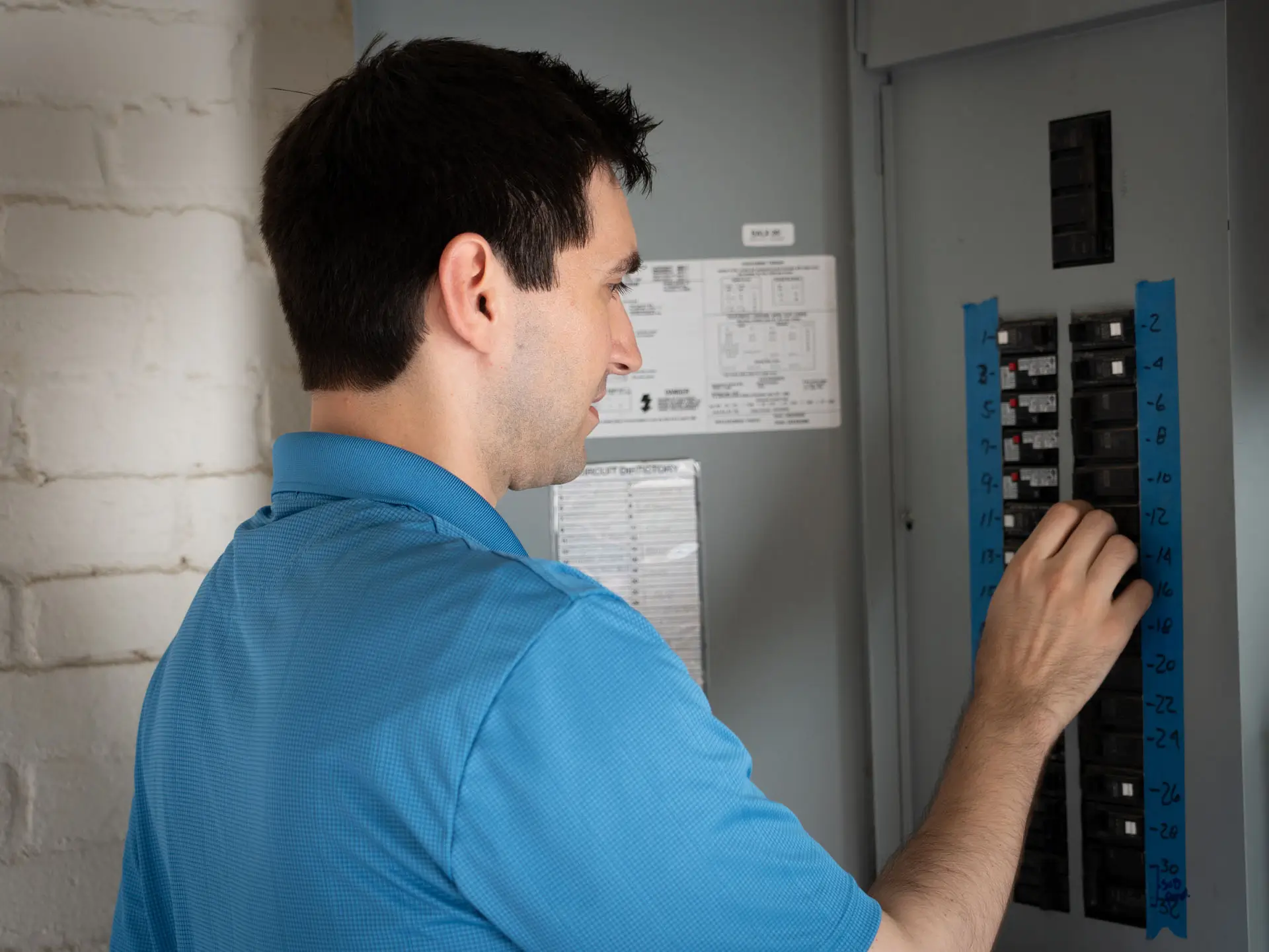
Your electrical panel is the heart of your home’s electrical system. It routes power from the utility into every circuit, protects wiring from overloads, and makes sure your HVAC, appliances, and electronics can run safely at the same time.
Ellington provides electrical panel service in Rockledge, FL, including inspection, repair, and upgrades, so your home can keep up with modern electrical demand.
Why Your Electrical Panel Matters for Home Safety
Every time you turn on a light, start your AC, or plug in a device, power flows through your panel first. The breakers inside are designed to shut off quickly if a circuit is overloaded or shorted, reducing the risk of overheating wires and potential electrical fires. When panels are outdated, damaged, or overloaded, that protection doesn’t work as well as it should.
Many older homes in Rockledge and throughout the Space Coast still rely on outdated electrical panels, which were never designed for today’s technology: think central air, home offices, large TVs, and smart devices, all using power simultaneously.
Upgrading or properly servicing your panel isn’t just a convenience upgrade; it’s a core electrical safety step for your home and family.
Signs You Need Electrical Panel Service
Most homeowners first notice panel problems as “annoying” symptoms that pop up again and again. Pay attention to these early warnings to address issues before they result in expensive damage or downtime.
Frequent Breaker Trips and Power Interruptions
If you find yourself constantly resetting breakers, or if certain rooms lose power when larger appliances start, your panel or branch circuits may be overloaded. Frequent breaker trips can point to worn breakers, loose connections, or circuits carrying more than they were designed for.
In these cases, circuit breaker panel repair or reconfiguring how circuits are loaded may help, but persistent issues can also signal the need for a larger panel or additional circuits. That means it’s a good time to have a licensed electrician look at the panel, rather than just continuing to flip the breaker again and hoping it holds.
Overheating Panels or Burning Odors
A warm panel cover, hot breakers, buzzing sounds, or a burning or “hot plastic” smell near your breaker box are all urgent warning signs. These can indicate loose connections, overloaded circuits, or failing components that generate excess heat.
This is not something to watch and wait on. If you notice overheating or burning odors, avoid opening the panel yourself and call for prompt service. An electrician can find and correct the source of the heat before it causes major damage.
Aging or Undersized Electrical Panels
If your home still has its original panel from decades ago, or if you have a very small breaker box that’s completely filled with no room for new circuits, your system may be undersized for modern use.
Signs to watch out or include:
- A panel brand or style known to be outdated or recalled.
- A lack of available breaker spaces when you add new equipment.
- Signs of corrosion, rust, or brittle components inside the panel.
In these cases, it often makes more sense to plan an electrical panel upgrade than to continue patching an old, undersized box.
Electrical Panel Inspections and Diagnostics
A professional electrical panel inspection goes much deeper than a quick glance at the breakers.
An electrician will:
- Remove the panel cover to check wiring connections, breaker condition, and signs of overheating or arcing.
- Verify proper grounding and bonding.
- Look for moisture, rust, corrosion, or physical damage.
- Confirm that circuits are labeled and organized in a way that makes sense.
As part of this process, your electrician can perform an electrical load calculation to see how much power your home actually uses compared to what the panel and service are rated for. This helps determine whether your current setup can safely handle existing loads, planned HVAC upgrades, or other additions like a home generator.
Electrical Panel Upgrades and Replacements
Sometimes simply resetting breakers or adding one more circuit isn’t enough to keep your home’s electrical system safe and reliable. In those situations, upgrading or replacing the electrical panel is often the better long-term fix.
You may want to consider a panel upgrade if you’re:
- Adding a new central AC, heat pump, or other large HVAC equipment that will significantly increase your home’s electrical demand.
- Installing a home generator, EV charger, or another major appliance that needs dedicated space and capacity in the panel.
- Remodeling, finishing a garage or porch, or adding living space and need more circuits than your current panel can safely support.
- Relying on an old panel, one that shows visible damage or corrosion, or has become unreliable with frequent trips, buzzing, or heat.
In these cases, upgrading the panel is about more than convenience; it helps prevent overloaded circuits, nuisance breaker trips, and potential safety hazards as your home’s electrical needs grow.
Preparing Your Home for HVAC Systems and Generators
HVAC systems and whole‑home generators both draw significant power and must be wired correctly to your main panel.
If the panel isn’t sized or configured correctly, you can end up with:
- Breakers that trip whenever the AC or heat pump starts.
- A generator that can’t safely support all the circuits you expect it to.
- Imbalanced loads that stress equipment and shorten its life.
Before investing in a new air conditioning system or a home generator, it’s smart to have your panel evaluated. An electrician can confirm that the panel has enough capacity, space, and the right configuration to support your HVAC electrical requirements and backup power system without overloading anything.
Electrical Panels and Florida Code Compliance
Any significant work on an electrical panel, especially upgrades and replacements, needs to comply with Florida building codes and local permitting requirements.
That includes:
- Pulling the correct permits before panel replacement or major changes.
- Installing equipment that meets current code and manufacturer specifications.
- Passing final inspections from the local authority having jurisdiction.
Working with a licensed electrical contractor means you don’t have to navigate the code details or permitting process on your own.
Ellington coordinates the permitting and inspection process so your upgraded panel is safe, up to code, and ready to serve your home for the long term.
Schedule Electrical Panel Service in Rockledge
If you’re dealing with frequent breaker trips, flickering lights, burning smells near your panel, or an older electrical system, it’s a good time to schedule a professional inspection. An electrical panel visit can catch issues early and make sure your home’s power capacity is keeping up with your appliances, HVAC, and everyday needs.
Ellington offers electrical panel service for Rockledge and Space Coast homeowners, with convenient online scheduling and licensed electricians who understand local codes and conditions. When you’re ready, book a visit online or call, and our electricians will inspect your panel, explain your options, and help keep your home powered safely.
Schedule OnlineFrequently Asked Questions
Common warning signs are: breakers trip repeatedly (especially the same one); panel feels warm or buzzes/crackles; you smell burning plastic near the panel; or you see rust, corrosion, or water staining on the enclosure. Other signs include: double-tapped or mismatched-brand breakers; running out of breaker slots; outdated panel (Challenger, Zinsco, Federal Pacific); or the home is still on 60A or 100A service. Current NEC and ENERGY STAR guidance treat 200A as the baseline for most homes.
For a smaller home (under ~1,500 sq ft) with gas heat, gas range, no central AC, and no EV, 100A is still adequate. For modern setups — central AC, heat pump, electric range, electric water heater, EV charger, or heavy home-office load — 200A is the practical minimum, and many new builds default to 200A. The only reliable way to decide is an NEC Article 220 load calculation by a licensed electrician, done before any quote.
Legally, in most jurisdictions a homeowner can pull a permit on their own primary residence — but a panel upgrade involves disconnecting the utility-owned service drop at the meter, requires coordination with the utility, code-compliant grounding and bonding, and a city inspection before reconnection. The combined shock hazard and paperwork is why virtually all panel upgrades are done by licensed electricians.
All three were widely installed from the 1950s through the early 1980s and have well-documented defects causing breaker trip failure during a fault — i.e., the panel stays energized when it should shut off. Testing shows Federal Pacific Stab-Lok breakers fail to trip at rates up to 60% under overcurrent conditions, and Zinsco breakers develop aluminum-bus connections that weld shut over time. None were formally recalled by the CPSC, but many insurers decline coverage until the panel is replaced, and most licensed electricians refuse to add breakers to them. If you see one of these brands on the panel label, get a replacement quote — this isn't optional maintenance.