




BLOG
How Does a Home Generator Work?

When a hurricane darkens the Space Coast or a summer storm knocks out power in your neighborhood, a professionally installed home generator springs into action automatically, restoring electricity within seconds without any action from you. But how does this remarkable technology actually work?
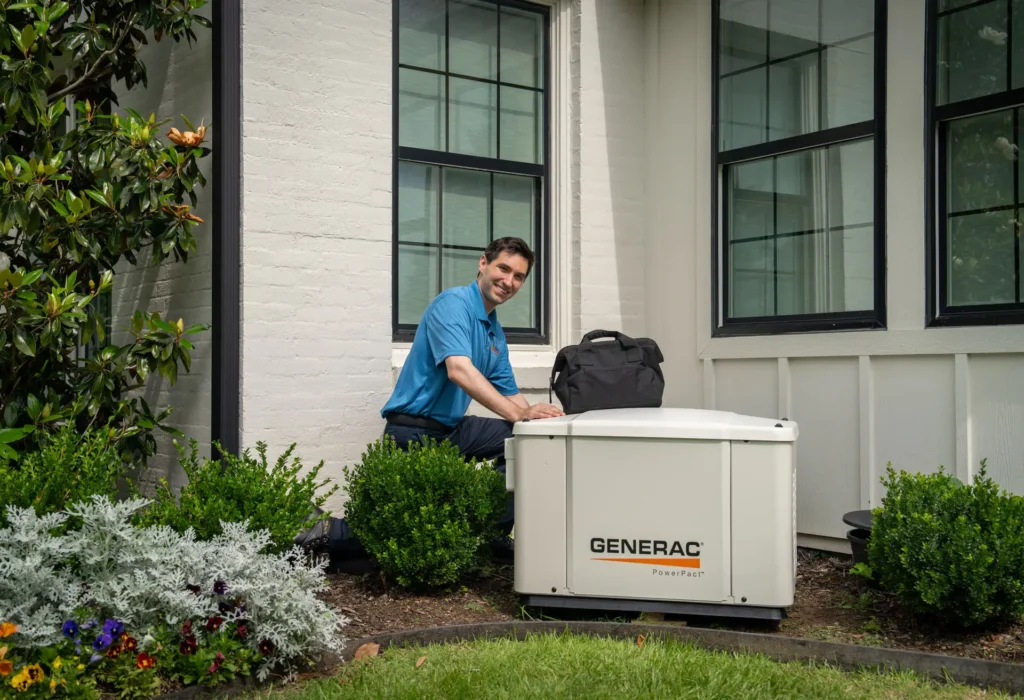
Generac whole-house generators have become essential protection for families throughout Rockledge, Palm Bay, Melbourne, and surrounding Brevard County communities.
This guide walks you through exactly how modern home generators detect power loss, activate automatically, and keep your family safe and comfortable during extended outages.
Understanding the Basics of Standby Power
A home generator is essentially a power plant for your residence: a self-contained system that continuously monitors your utility power and instantly takes over when the grid fails. Unlike portable generators that require manual startup and fuel management, a standby generator operates completely automatically. The moment utility power drops, sensors detect the outage and trigger the generator to start within seconds.
This automatic response makes whole-house generators fundamentally different from portable alternatives:
- No manual startup required: The system activates automatically
- Fuel management: Propane or natural gas supplies power continuously
- No extension cords or decisions about which appliances to power
- No interruption to comfort: Your entire home continues operating normally
- No action needed from you during the crisis
For families in areas like Satellite Beach and near Sebastian who face hurricane vulnerabilities, this automatic protection provides peace of mind that portable generators simply cannot match.
Key Components of a Home Generator System
A home generator system works through the coordinated action of several critical components, each playing a specific role in detecting outages and restoring power.
Automatic Transfer Switch (ATS)
The automatic transfer switch is the brain of your generator system. It continuously monitors incoming utility power 24/7, checking voltage and frequency. The moment it detects a power loss, the ATS signals your generator to start and simultaneously disconnects your home from the utility grid.
Here's what happens:
- Sensors detect utility power loss instantly
- ATS signals generator engine to start immediately
- Generator reaches operating speed and voltage
- ATS confirms generator power is stable and safe
- Home electrical panel switches to generator power
- All circuits restore power automatically
Once utility power is restored, the ATS automatically switches your home back to grid power and signals your generator to shut down. The ATS also includes critical safety features that prevent dangerous "backfeeding, "sending generator power back into utility lines where it could harm line workers.
Fuel Source and Power Supply
Home generators require continuous fuel to operate. Generac systems typically use either natural gas or propane:
- Natural gas generators connect to your existing utility line, providing unlimited fuel supply as long as local gas service remains operational
- Propane generators use large tanks installed on your property, storing fuel indefinitely and providing backup power even if natural gas service is disrupted
For homeowners in Edgewater, West Melbourne, and throughout Brevard County, this fuel reliability matters tremendously. After major hurricanes, natural gas service can be disrupted for weeks while propane tanks continue supplying fuel.
During installation, Ellington's licensed electricians help you evaluate which fuel source makes sense for your property and budget.
Generator Engine and Alternator
At the core of every generator sits an engine engineered specifically for continuous operation. This engine connects to an alternator, which converts mechanical energy into electrical current. As the engine runs, it turns the alternator's rotor, generating electricity that flows through your home's electrical system to power appliances, HVAC systems, lighting, and all connected devices.
The engine automatically adjusts its speed based on your home's power demands, running efficiently whether drawing minimal or maximum power. This load-sensing capability means your generator operates optimally, consuming fuel proportional to actual needs.
Control Panel and Smart Monitoring
Modern Generac generators include sophisticated control panels that monitor system health continuously. These panels display:
- Current fuel levels and consumption rates
- Engine temperature and performance metrics
- Voltage output and system status
- Maintenance schedules and alert notifications
Many newer Generac models offer smartphone connectivity, allowing homeowners to monitor their generator's status remotely. The control panel also manages automatic self-tests, running your generator briefly each week to ensure it starts reliably. If problems are detected, you're alerted so maintenance can be scheduled before a real outage occurs.
What Happens When the Power Goes Out
The moment a hurricane, storm, or grid failure cuts utility power, your entire generator system springs into coordinated action within 10-15 seconds:
- Sensors detect utility power loss instantly
- ATS signals your generator engine to start immediately
- Generator reaches operating speed and voltage levels
- ATS confirms generator power is stable and safe
- Home electrical panel switches to generator power
- All circuits automatically restore power throughout your home
Food stays cold. Your air conditioning maintains comfort. Medical equipment continues operating. For families in Rockledge and surrounding communities, this automatic protection transforms a potentially dangerous crisis into a minor inconvenience.
How Generac Standby Generators Keep Your Home Running
Generac generators are engineered specifically for the unique demands of American homes. These systems power your entire house continuously, not just essential circuits, but full home power including major appliances, HVAC systems, water heaters, and all other electrical loads simultaneously.
Key advantages include:
- Available in capacities from 7 to 24+ kilowatts to match your home's needs
- Sophisticated protection systems safeguard your electrical infrastructure
- Voltage and frequency regulation matches utility standards precisely
- Automatic load management prevents overload conditions
- Built-in maintenance reminders keep systems in peak condition
Comparing Portable vs. Whole-House Generators
Understanding the differences between portable and whole-house generators explains why whole-house systems have become the preferred choice for serious homeowners:
| Factor | Portable Generator | Whole-House Generator |
| Activation | Manual startup required | Automatic, no action needed |
| Power scope | Limited circuits, extension cords | Full home power |
| Fuel management | Manual refueling required | Automatic fuel supply |
| Setup during crisis | Time-consuming, stressful | Ready immediately |
| Convenience | Requires active monitoring | Completely automatic |
| Upfront cost | Lower | Higher investment |
| Long-term value | Limited outage protection | Comprehensive peace of mind |
For families throughout the Space Coast, the peace of mind and convenience of whole-house Generac systems often justify the investment.
Why Florida Homeowners Rely on Backup Power
Florida homeowners understand something residents in other states often overlook: extended power outages aren't theoretical; they're seasonal certainties. Hurricane season runs June through November, with peak activity in September. Recent hurricanes like Ian and Milton left hundreds of thousands of Florida residents without power for weeks, revealing the critical importance of backup power systems.
Beyond hurricanes, Florida's summer thunderstorms frequently damage transformers and power lines, creating neighborhood outages lasting hours or days. For homeowners in areas like Sebastian, Edgewater, Satellite Beach, and throughout Brevard County, backup power protection is essential.
Schedule a Consultation for Your Generac Generator Installation
Understanding how generators work is the first step toward protecting your home. Contact Ellington to learn about Generac whole-house generators and how they can protect your family. Our licensed electricians can assess your home's power requirements, evaluate your property for optimal generator placement, and provide transparent pricing on installation and HVAC and generator maintenance.
Whether you need to schedule a generator consultation or have questions about how backup power systems work, Ellington's team of local HVAC and generator experts is ready to help.
Request your backup power estimate today by calling (321) 222-0605 or contacting Ellington online. Let us show you how a Generac generator can provide the peace of mind your family deserves when storms strike the Space Coast.