





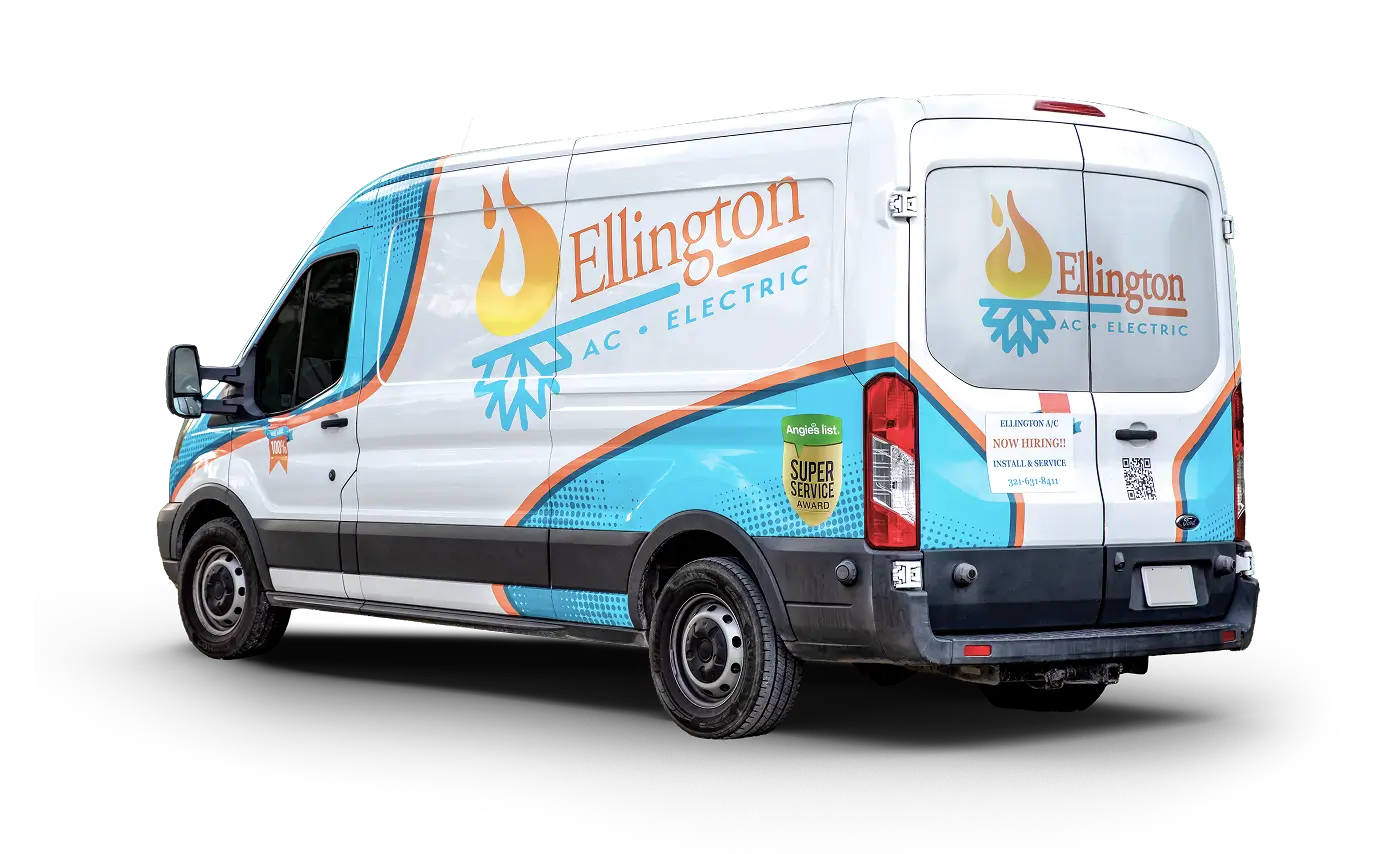
Ellington AC & Electric provides professional air duct cleaning in Rockledge, starting with an inspection so you only pay for what your ducts actually need. Rockledge duct cleaning means something a little different than it does inland, since in this humidity, ducts collect moisture along with dust, and that changes what "clean" really means. A quick vacuum won't fix a moisture problem, and a moisture problem won't stay fixed if it's just vacuumed away.
Why Rockledge Ducts Get Dirty, and Wet
Rockledge ductwork deals with two separate problems at once: ordinary dust buildup and a humidity issue most inland climates never have to solve. Both show up in the same system, but only one of them responds to cleaning alone.
- Attic duct condensation: Most Rockledge ducts run through hot, humid attics, so cold supply air meeting humid attic air causes condensation on and inside the ducts. That moisture is what turns ordinary dust into mold in air ducts, in a way plain dust buildup never would on its own.
- Degraded flex duct: Heat and humidity break down flexible ductwork over the years. It sags, kinks, and its inner liner deteriorates, trapping buildup and giving microbial growth somewhere to take hold.
- Constant runtime and lagoon dust: Near-year-round AC use pushes more air, and more of the fine dust common in Rockledge's Indian River Lagoon-adjacent air, through the system than a cooler climate ever would.
Cleaning solves the dust half of this problem. The moisture half needs a different fix, which is exactly what the next section addresses.
Should You Clean, Seal, or Replace Your Rockledge Ducts?
Not every duct problem gets solved by cleaning, and pretending otherwise is how homeowners end up paying for the same service twice. Here's how Ellington's inspection findings map to the right fix.
| What the Inspection Finds | Why It's Happening | Right Fix |
|---|---|---|
| Surface dust, post-renovation debris | Normal buildup / construction | Professional duct cleaning |
| Mold + damp ducts, musty smell | Attic condensation / humidity | Clean + treat + fix humidity/seal |
| Sagging, torn, shedding flex duct | Heat/humidity degradation | Replace the duct run |
| Clean ducts, humidity complaint | Moisture, not dust | Dehumidification, not cleaning |
This is the core of what Ellington does differently: the inspection comes first, and the recommendation follows what's actually found, not a default sales script. For the full duct and vent cleaning process, Ellington's main service page covers what a professional cleaning includes in more depth.
After a Storm: Check Your Ducts for Moisture
A hurricane or tropical system can turn a manageable humidity issue into a real duct-mold problem fast. Roof leaks, humidity intrusion, and days without AC in Florida heat during a power outage all spike attic and duct moisture at once, which is close to ideal conditions for mold to bloom inside ductwork.
If a Rockledge home lost power for an extended stretch during a storm, a post-storm duct check is worth scheduling even if nothing looks obviously wrong. Ellington can check ducts as part of a broader AC maintenance visit after a storm, rather than waiting for a musty smell to show up weeks later.
Does Your Rockledge Home Actually Need Duct Cleaning?
The honest answer is that it depends on what an inspection actually finds, not on a fixed calendar. The EPA doesn't recommend routine duct cleaning on a schedule, and NADCA duct cleaning guidance points the same direction: clean when there's a real reason, such as visible mold, vermin, heavy debris, or a household member with respiratory sensitivities.
For a lot of Rockledge homes, the bigger win isn't cleaning at all. It's controlling humidity and sealing leaky attic ducts so buildup doesn't just come back. Cleaning without fixing the moisture source resets the clock instead of solving the problem, which is why an inspection, not a sales pitch, is the right first step.
Your Honest Rockledge Duct Team
Ellington AC & Electric is based right in Rockledge, and that inspection-first approach is built into how the team works here. Technicians use NADCA-aligned methods with sealed, negative-pressure equipment, and they'll tell you when cleaning alone won't fix what's actually going on, even if that means a smaller invoice. Ellington's technicians are NATE-certified and hold Florida HVAC license #CAC1813503, and every job is backed by Ellington's satisfaction guarantee.
Homeowners dealing with humidity alongside dust often benefit from pairing an inspection with a look at air purifiers or dehumidifiers for the whole system, not just the ductwork.
Ready to find out what your Rockledge ducts actually need? Call Ellington's Rockledge office at (321) 222-6718 or schedule online for an inspection. Ellington also serves homeowners throughout the Rockledge service area and the surrounding Brevard County communities.
Schedule Online
Frequently Asked Questions
A musty AC smell when the system runs usually means mold or mildew has taken hold inside the ductwork, and moisture is typically the underlying cause. Ducts running through humid Rockledge attics develop condensation where cold supply air meets warm, damp air, and that moisture lets mold grow on the dust already inside the ducts. Cleaning removes the buildup, but a lasting fix also means addressing the humidity source, or the smell comes back.
It depends on the duct material and how far the damage has gone. Hard-surface metal ductwork with mold on the surface can usually be cleaned and treated, but flexible ductwork with mold in a degraded inner liner often needs to be replaced rather than cleaned, since the contamination is inside a material that's already breaking down. Ellington's inspection determines which situation applies before recommending either option.
Yes, especially if the home lost power for an extended stretch or took on any roof or humidity intrusion during the storm. Days without AC in Florida heat, combined with storm moisture, create close to ideal conditions for mold to develop inside ductwork within days. A post-storm inspection catches this before it turns into a musty smell weeks later.
No. Duct cleaning removes dust and mold from the ductwork, but it doesn't lower a home's humidity, and in Rockledge, humidity is usually the real driver behind musty, mold-prone ducts. If the moisture isn't addressed, buildup and odors return after a cleaning. Ellington evaluates humidity and duct sealing alongside cleaning and may recommend whole-home dehumidification so the problem gets solved at the source.
Sagging, visible tears, or a liner that's shedding material are signs flexible ductwork has degraded past the point cleaning can fix. Heat and humidity break flex duct down from the inside over years, and once the liner itself is compromised, cleaning just moves debris around inside a duct run that needs to be replaced. An inspection is the only reliable way to tell the difference between dirty flex duct and degraded flex duct.